Architecting Resilient API Frameworks for Real-Time Synchronization of Analyst Performance Indicators and Automated Membership Renewals in Sports Forecasting Portals
Written by Hugo Becker · Jul 25, 2026
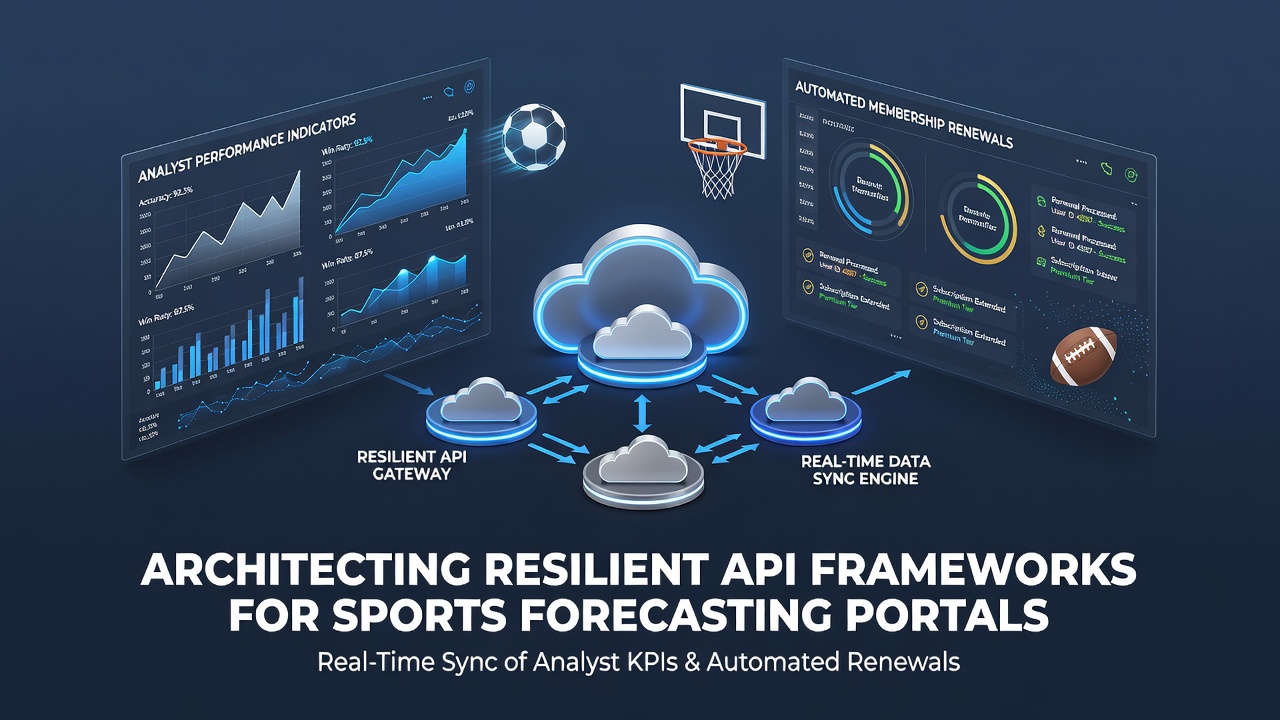
Architecting Resilient API Frameworks for Real-Time Synchronization of Analyst Performance Indicators and Automated Membership Renewals in Sports Forecasting Portals
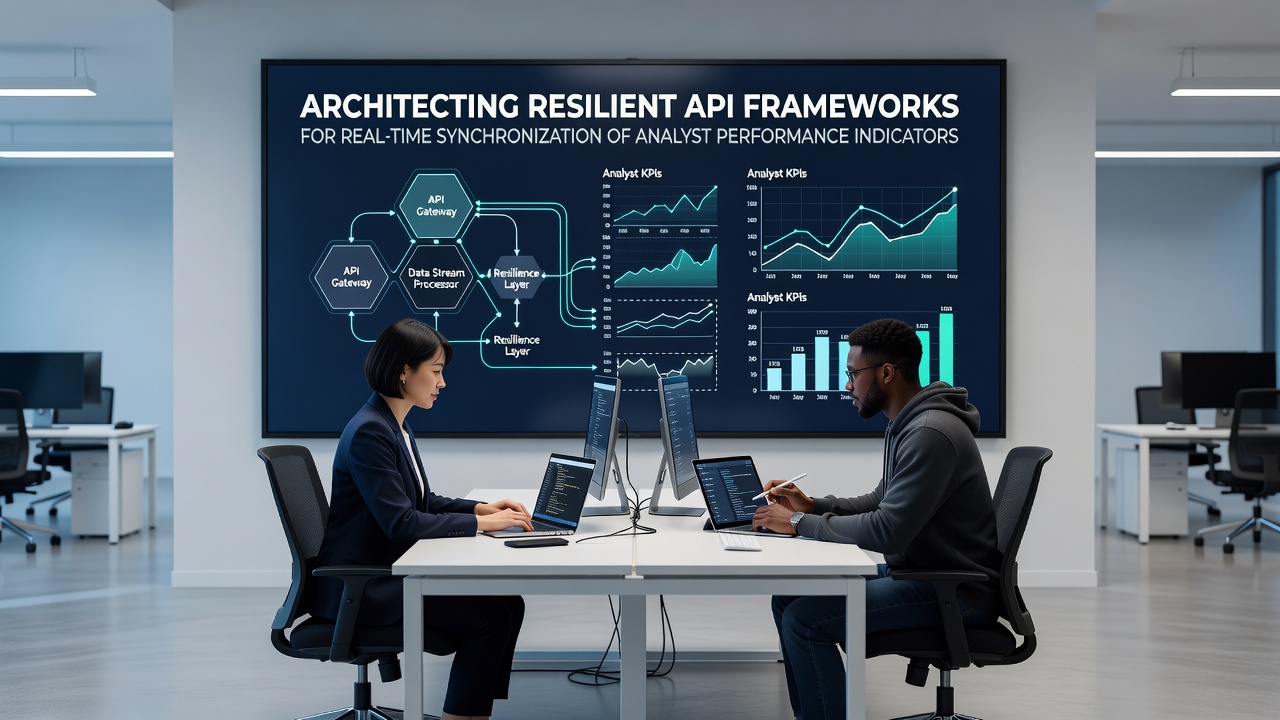
Architecting resilient API frameworks starts with understanding the demands of sports forecasting portals where analyst performance indicators must update across distributed systems without delay. These indicators include strike rates, profit margins, and accuracy scores that shift with every completed event. Frameworks built on event-driven architectures allow services to publish changes the moment new data arrives, while consumers subscribe to those streams for immediate reflection in user dashboards and backend billing engines.
Core Elements of Resilient API Design
Resilience comes from layering redundancy into every component so that single points of failure do not interrupt synchronization. Load balancers distribute incoming requests across multiple instances, circuit breakers prevent cascading errors when downstream services slow down, and retry mechanisms with exponential backoff handle transient network issues. Observers note that organizations implementing these patterns report higher uptime during peak periods such as major sporting tournaments when query volumes spike.
Data consistency models play a central role because performance metrics require strong consistency while membership status can tolerate eventual consistency in many cases. Developers often choose event sourcing combined with CQRS to separate read and write paths, allowing the system to rebuild state from a log of events if a node fails. This approach supports both real-time indicator updates and the accurate triggering of renewal workflows based on subscription tiers tied to those indicators.
Real-Time Synchronization Mechanisms
Real-time synchronization relies on protocols that push updates rather than waiting for polling intervals. WebSocket connections maintain persistent channels between client applications and the API gateway, delivering performance indicator changes within milliseconds of calculation. Message brokers such as Apache Kafka or RabbitMQ queue events from data ingestion pipelines, ensuring that analyst metrics computed in one microservice reach billing and user-facing services in the correct order.
According to documentation from the National Institute of Standards and Technology, secure API implementations incorporate mutual TLS and token-based authentication to protect these channels. Sports forecasting platforms that adopted these standards in 2025 observed measurable reductions in unauthorized access attempts during high-traffic months leading into July 2026. The frameworks also log every synchronization event with timestamps and source identifiers, creating audit trails that satisfy regulatory requirements for data integrity in consumer-facing prediction services.
Automated Membership Renewals
Automated membership renewals integrate directly with the same performance indicator streams. When an analyst's metrics cross predefined thresholds, the system evaluates whether the subscriber qualifies for continued access or requires an upgrade. Renewal logic executes through scheduled jobs that query the latest synchronized data, calculate prorated charges, and invoke payment processors without manual intervention.
Webhook endpoints receive confirmation from payment gateways and update membership records in the central database, which then triggers cache invalidation across all connected services. This closes the loop so that users see updated access levels immediately after a successful renewal. Research published by the University of Melbourne's Centre for Digital Transformation shows that portals using tightly coupled indicator and billing APIs experience fewer subscription lapses compared with systems that rely on batch updates.
Security and Compliance Considerations
Security measures extend beyond authentication to include rate limiting, input validation, and encryption of sensitive performance data both in transit and at rest. Role-based access controls ensure that only authorized internal services can modify renewal parameters, while read-only endpoints expose indicator data to third-party analytics tools under strict scopes. Compliance with data protection frameworks such as those outlined by the Australian Competition and Consumer Commission requires explicit consent mechanisms before any performance data influences billing decisions.
Testing these frameworks involves chaos engineering practices where engineers deliberately introduce latency or failures into synchronization paths to verify that renewal processes continue without data loss. Automated test suites run daily, simulating thousands of concurrent indicator updates and renewal requests to confirm that the system maintains accuracy under load.
Implementation Patterns Observed in Production
Production deployments frequently separate the API gateway from core business logic through container orchestration platforms. Kubernetes clusters manage scaling of individual services responsible for performance calculations, event publishing, and payment orchestration. Configuration management tools store environment-specific settings for renewal thresholds, allowing teams to adjust rules without redeploying code. Those who have studied these deployments find that gradual rollout strategies, including canary releases, reduce the risk of widespread disruption when new synchronization features are introduced.
Conclusion
Effective architectures combine event-driven communication, robust security layers, and automated decision engines to keep analyst performance indicators current and membership renewals seamless. Organizations that maintain these frameworks continue to adapt them as data volumes grow and regulatory expectations evolve, ensuring sports forecasting portals deliver reliable experiences to both analysts and subscribers.