Navigating Permission Hierarchies to Safeguard Proprietary Insights Within Membership-Based Forecasting Services
Written by Sofia Klein · Jul 8, 2026

Navigating Permission Hierarchies to Safeguard Proprietary Insights Within Membership-Based Forecasting Services
Membership-based forecasting services rely on structured permission hierarchies to control who accesses proprietary models, data streams, and predictive algorithms, and these systems operate through layered roles that assign varying degrees of visibility based on subscription levels and verification status. Research from the National Institute of Standards and Technology outlines how role-based access control frameworks establish clear boundaries that prevent unauthorized exposure of sensitive forecasting methodologies while supporting multiple user tiers within a single platform.
Service operators typically define core roles such as basic subscribers, premium analysts, content contributors, and system administrators, each with distinct capabilities that determine whether individuals view raw data feeds, aggregated performance metrics, or the underlying computational logic itself. According to findings published by the Australian Cyber Security Centre, organizations that implement attribute-based extensions alongside traditional roles achieve finer granularity, allowing permissions to adjust dynamically according to factors like account tenure, geographic location, or compliance certifications.
Establishing Tiered Access Structures
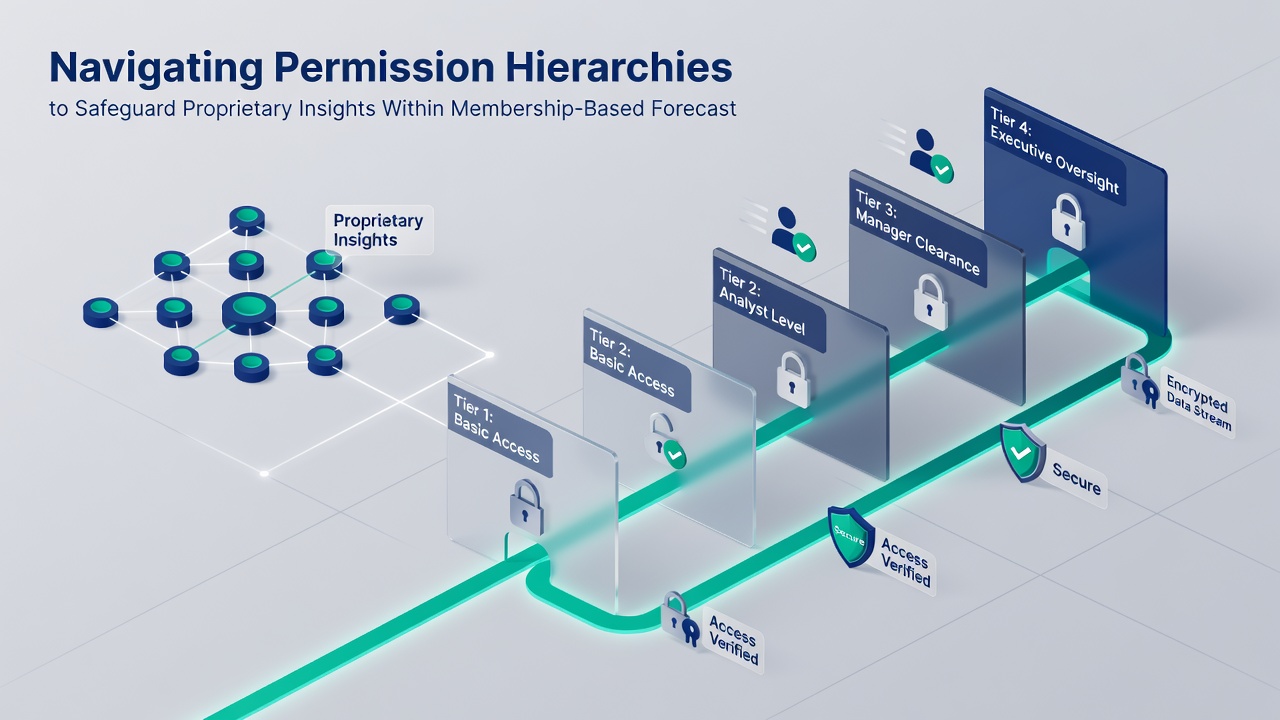
Basic membership levels grant users limited views of outcome summaries and historical accuracy rates, yet they restrict direct interaction with live data pipelines or model parameters, whereas elevated tiers unlock detailed scenario modeling tools and proprietary indicator sets. Those who manage these platforms observe that gradual permission escalation, triggered by payment confirmation or activity thresholds, reduces the risk of bulk data extraction by transient accounts.
Implementation often begins with mapping every proprietary element to specific access rules, including forecast generation scripts, client-specific tuning variables, and real-time alert engines, and administrators then configure inheritance chains so that higher roles automatically receive all lower-level privileges without redundant assignments. Data indicates that services using automated role propagation experience fewer configuration errors during membership renewals or upgrades.
Technical Controls and Verification Mechanisms
Verification processes integrate identity checks with permission assignments, requiring two-factor authentication before users reach any tier that displays unique insight combinations, and logging systems record every query against protected datasets to support audits. In July 2026 several forecasting platforms updated their verification protocols to align with emerging multi-jurisdictional data handling expectations, which prompted refinements in how permissions respond to cross-border access requests.
Encryption at rest and in transit pairs with permission hierarchies so that even if storage systems face compromise, decrypted content remains unavailable without the corresponding role credentials, while token-based session management ensures permissions expire automatically when subscriptions lapse or when anomalous behavior triggers review.
Handling Edge Cases and Compliance Requirements
Service providers encounter situations where users request temporary elevation for collaborative projects or where regulatory inquiries demand selective disclosure of proprietary elements, and permission systems must accommodate these scenarios through time-limited overrides that automatically revert once the need concludes. Observers note that maintaining separate audit logs for override events helps demonstrate compliance during external reviews.
Geographic restrictions add another dimension, because certain jurisdictions impose data localization rules that require permission hierarchies to block access from outside approved regions even for verified premium members, and automated geofencing combined with role checks addresses these constraints without manual intervention on every login.
Monitoring and Continuous Adjustment
Analytics dashboards track permission usage patterns across all roles, revealing whether certain tiers consistently attempt to exceed their boundaries or whether particular proprietary assets receive disproportionate query volume, and administrators use these insights to refine hierarchy rules over time. Research indicates that regular permission reviews, conducted at fixed intervals or after significant platform changes, maintain alignment between access grants adn actual operational needs.
Integration with external identity providers allows organizations to inherit verified attributes from enterprise directories or government-issued credentials, which streamlines onboarding for institutional subscribers while preserving the internal hierarchy that protects core forecasting assets from broader exposure.
Conclusion
Permission hierarchies function as the operational backbone that lets membership-based forecasting services scale access while protecting proprietary insights, and their effectiveness depends on precise role definitions, dynamic attribute handling, and ongoing monitoring that adapts to regulatory shifts and usage trends. Organizations that document these structures thoroughly and test them against realistic threat scenarios maintain stronger safeguards over time.