Optimizing Database Queries for High-Traffic Sports Prediction Portals Using Advanced Caching Mechanisms
Written by Sofia Klein · Jun 22, 2026
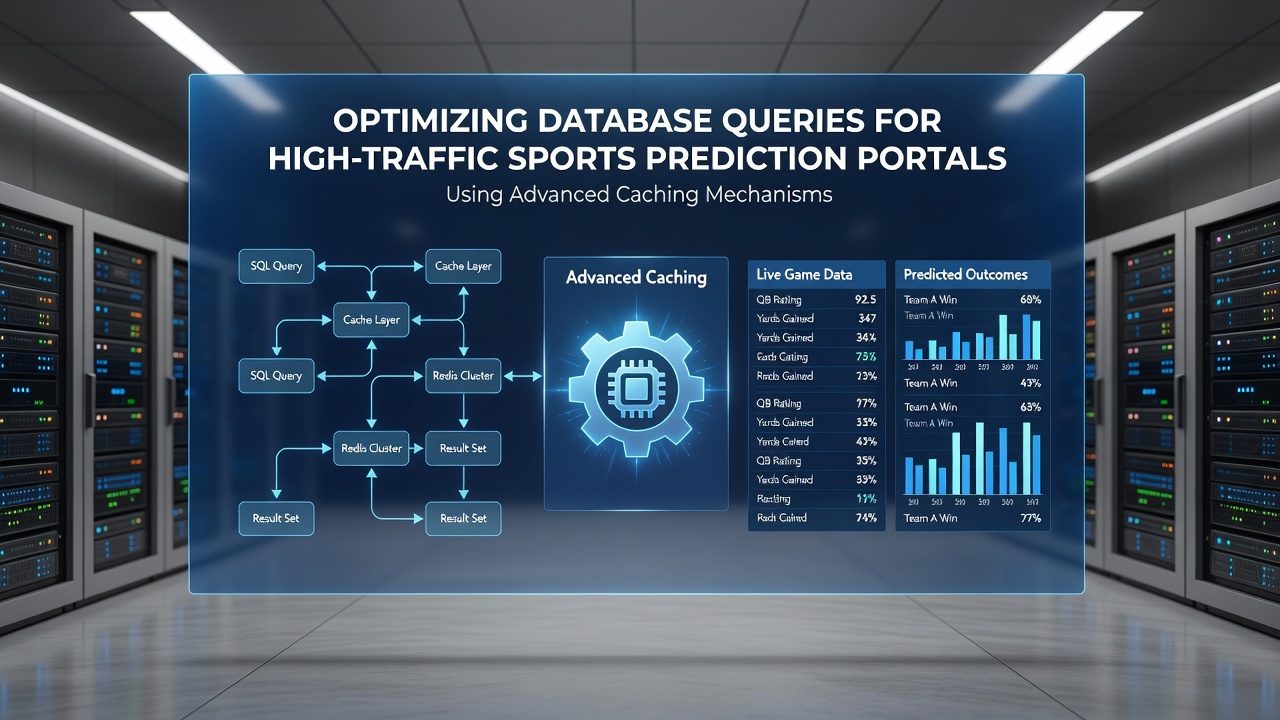
Optimizing Database Queries for High-Traffic Sports Prediction Portals Using Advanced Caching Mechanisms
High-traffic sports prediction portals process thousands of simultaneous queries for live scores, user predictions, historical data, and performance analytics, which places significant demands on underlying database systems. These platforms rely on efficient data retrieval to maintain responsiveness during peak events like major tournaments or championship matches, and database query optimization combined with advanced caching mechanisms addresses these demands by reducing direct database load while preserving data accuracy.
Key Challenges in High-Traffic Environments
Sports prediction portals experience unpredictable traffic spikes that coincide with real-time events, leading to complex joins across tables containing user profiles, match statistics, and prediction histories. Without optimization, repeated queries for similar data sets consume excessive CPU and memory resources, which slows response times and increases operational costs. Observers note that portals handling multi-region users encounter additional latency from geographic data distribution, making it necessary to implement layered strategies that target both query efficiency and data storage patterns.
Research from academic institutions shows that unoptimized queries involving frequent aggregations on live data can account for up to 70 percent of database processing time during high-traffic periods. In June 2026, industry reports highlighted how certain prediction platforms mitigated these issues through systematic indexing and selective data partitioning, allowing faster access to frequently requested match outcomes and user-specific forecasts.
Database Query Optimization Techniques
Developers apply indexing strategies to columns used in WHERE clauses and JOIN operations, which accelerates data retrieval without altering application logic. Proper indexing reduces full table scans, and experts recommend analyzing query execution plans to identify bottlenecks before deployment. Partitioning large tables by date ranges or event categories further improves performance, enabling parallel processing of historical versus current data.
Query rewriting also plays a central role, where developers refactor complex subqueries into temporary tables or use materialized views for repeated calculations. According to findings published by the Database Research Group at the University of Waterloo, these adjustments have delivered measurable reductions in average query latency across distributed sports data systems. Active monitoring tools track slow queries in production, allowing teams to refine indexes and rewrite patterns based on actual usage patterns rather than assumptions.
Advanced Caching Mechanisms
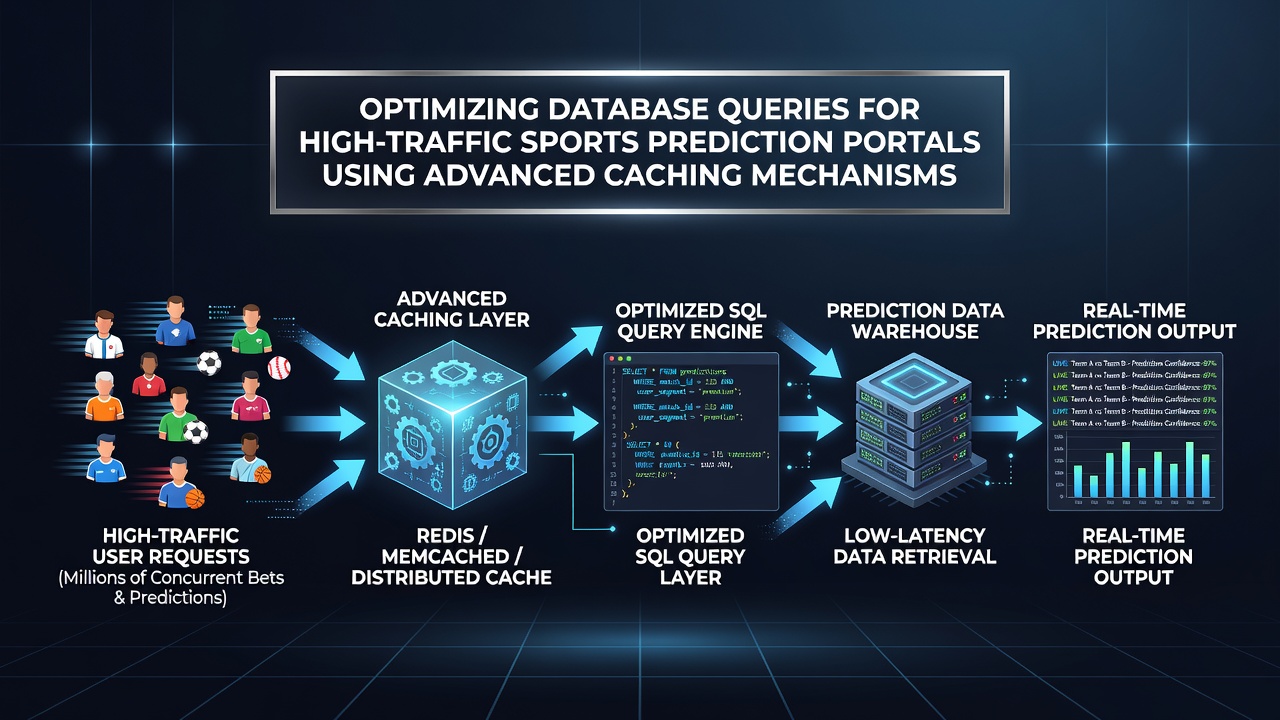
Caching layers sit between the application and the database, storing results of expensive queries for rapid reuse. Redis and Memcached represent widely adopted solutions, with Redis supporting data structures like sorted sets that suit leaderboard and ranking features common in prediction portals. Memcached excels in simple key-value storage scenarios where rapid invalidation of outdated match data is required. Both systems integrate with most web frameworks through client libraries that handle connection pooling and automatic failover.
Cache invalidation strategies determine effectiveness, and time-based expiration combined with event-driven updates ensures that live score changes propagate without stale data risks. Researchers at the National Institute of Standards and Technology have documented how hybrid caching approaches, which combine in-memory stores with database-level query caches, maintain consistency across high-volume read operations. Portals often implement write-through or cache-aside patterns depending on whether updates originate from administrative interfaces or automated data feeds.
Integration and Monitoring Practices
Successful deployments require coordination between caching layers and database schemas, including careful selection of cache keys that incorporate user context and query parameters. Load testing simulates peak conditions to validate that cache hit rates exceed 85 percent for common queries, which data from Canadian technology consortia indicates correlates with stable portal performance. Logging cache misses alongside query metrics helps teams identify when to adjust expiration policies or add new indexes.
Security considerations include encrypting cached sensitive prediction data and restricting access to cache instances through network segmentation. Automated scaling of cache clusters accommodates traffic growth, and container orchestration platforms facilitate deployment of these components alongside database replicas. Continuous integration pipelines run optimization checks on new code changes to prevent regression in query performance.
Conclusion
Optimizing database queries through indexing, partitioning, and rewriting, paired with advanced caching using tools like Redis and Memcached, enables sports prediction portals to handle elevated traffic volumes efficiently. These techniques reduce latency, lower infrastructure demands, and support consistent user experiences during critical events. As traffic patterns evolve, ongoing analysis of query logs and cache performance remains essential for maintaining system reliability across global user bases.