Synchronizing Admin-Curated Strike Rate Logs with Automated Billing Hooks on WordPress Prediction Platforms
Written by Sofia Klein · Aug 26, 2026
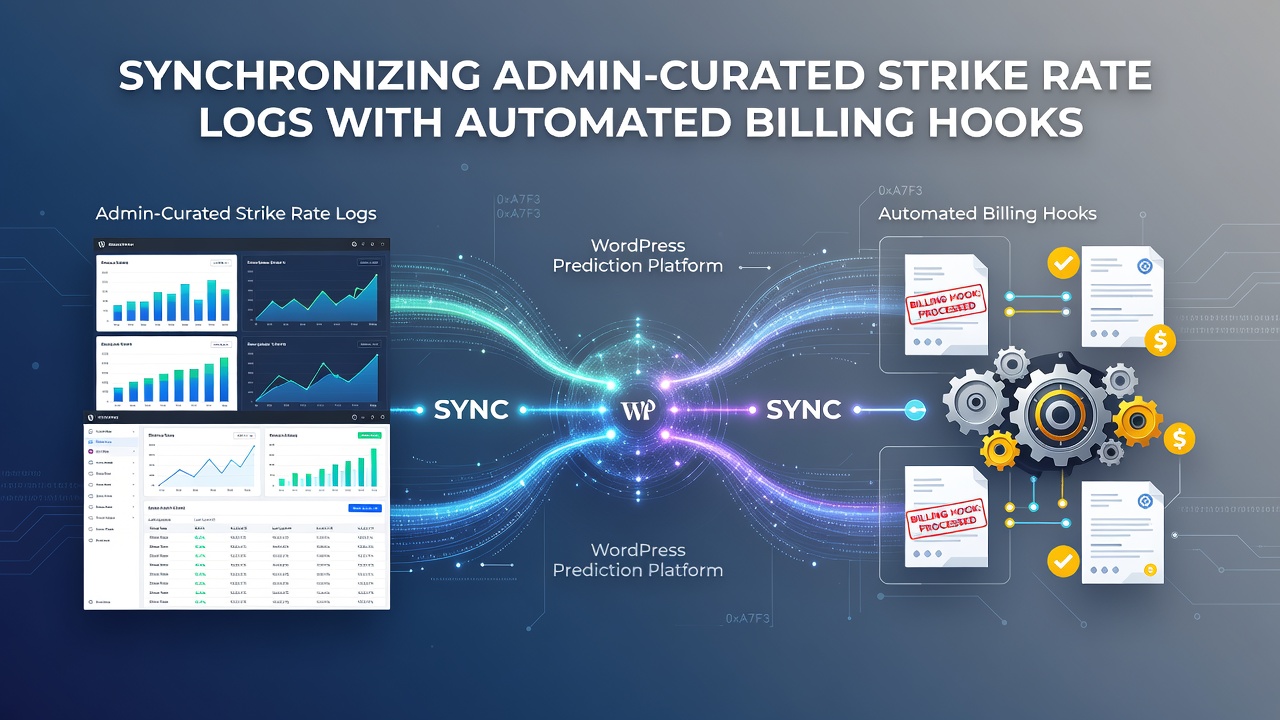
Synchronizing Admin-Curated Strike Rate Logs with Automated Billing Hooks on WordPress Prediction Platforms
Prediction platforms built on WordPress rely on admin-curated strike rate logs to track tipster performance, and these logs connect directly to automated billing hooks that manage subscription renewals based on verified results. Administrators maintain detailed records of win percentages, profit margins, and historical data within custom post types or meta fields, while billing systems such as those powered by WooCommerce Subscriptions or similar plugins monitor those same records to adjust access levels or trigger payments.
Core Components of Strike Rate Log Management
Strike rate logs consist of structured entries that include metrics like total tips issued, successful outcomes, and average returns, all entered through the WordPress admin interface by platform operators. These entries update in real time or on scheduled intervals, and developers often use WordPress hooks such as save_post or updated_post_meta to detect changes and initiate downstream actions. Observers note that platforms handling high volumes of tipster data frequently employ custom tables alongside standard post meta to store performance figures without overloading the main database.
Integration points appear when administrators set performance thresholds, for instance requiring a minimum 55 percent strike rate over a rolling 30-day window before a tipster qualifies for premium subscription tiers. The system reads these thresholds through conditional logic in PHP functions hooked to billing events, and it either grants continued access or pauses renewals accordingly.
Automating Billing Through WordPress Hooks
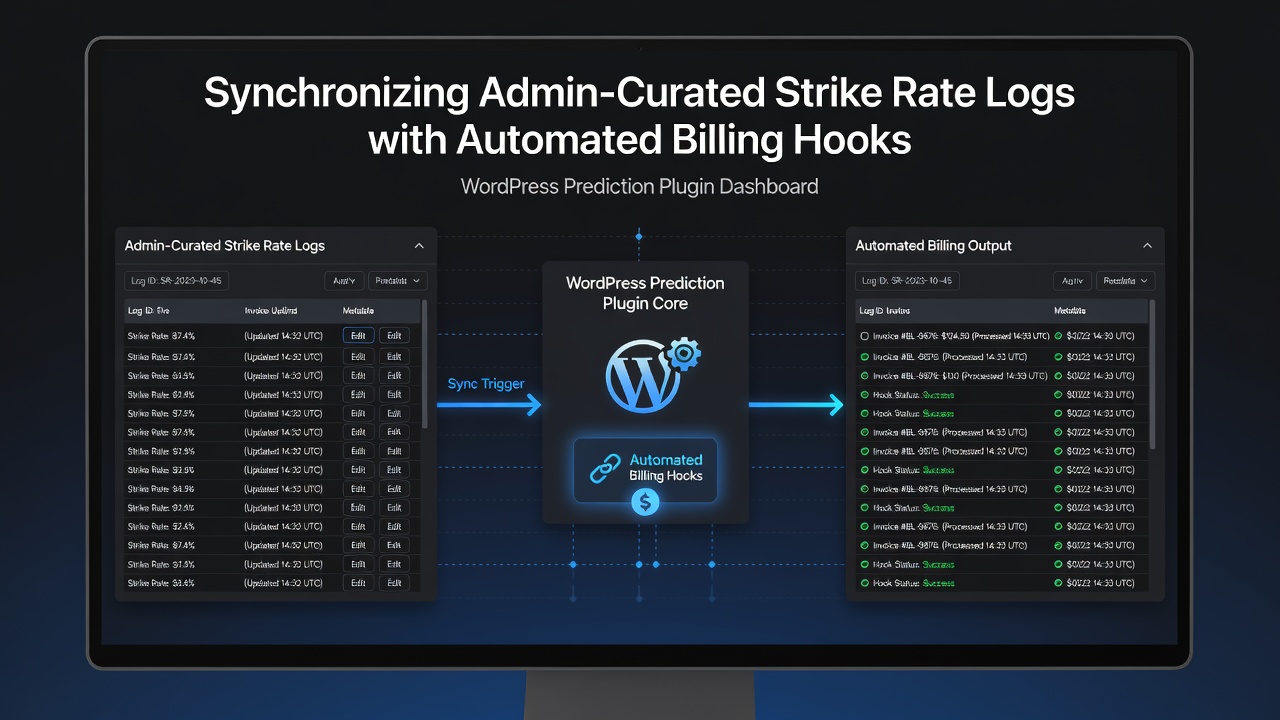
Automated billing hooks operate by listening for specific triggers tied to the strike rate data, including subscription renewal attempts and manual admin overrides. When a log entry updates, a custom function evaluates the new strike rate against stored criteria and communicates with the payment gateway via API calls to approve or decline recurring charges. This process runs through action hooks like woocommerce_subscription_renewal_payment or similar custom actions registered in the theme's functions file or a dedicated plugin.
By August 2026 many operators had shifted toward event-driven architectures that reduce manual oversight, allowing the admin-curated logs to serve as the single source of truth for both performance visibility and revenue collection. Data synchronization occurs through scheduled WP-Cron jobs or immediate webhook responses, ensuring that billing status reflects the latest verified statistics without requiring separate dashboard checks.
Technical Synchronization Methods
Developers implement synchronization by creating bidirectional connections between the log storage layer and the billing processor, often using WordPress transients or object caching to store temporary strike rate calculations that billing hooks can access quickly. When an admin saves a new tip result, the system recalculates overall performance, writes the result to both the primary log and a dedicated billing flag table, then fires an action that the subscription handler picks up to determine next steps. This approach avoids race conditions through locking mechanisms built into the update queries.
Those who maintain such platforms frequently combine custom fields managed via Advanced Custom Fields or similar tools with direct database queries executed inside hook callbacks. The result appears in user role assignments or membership levels that change automatically once performance data crosses defined boundaries, all while maintaining an audit trail of every log update and billing decision.
Handling Edge Cases and Data Integrity
Edge cases arise when strike rate calculations involve incomplete data sets or when administrators need to backdate corrections, and synchronization routines address these through versioned log entries that preserve historical states. Billing hooks check timestamps and revision numbers before acting on any change, which prevents erroneous charges based on outdated figures. Research from academic institutions such as those documented by Pew Research Center studies on digital platform operations shows that consistent data pipelines reduce discrepancies in automated systems across multiple industries.
Platforms also incorporate validation layers that require admin confirmation for large performance swings before propagating changes to billing, and they log every synchronization event for compliance reviews. External regulatory perspectives, including guidance from bodies like the Canadian Radio-television and Telecommunications Commission on digital service transparency, emphasize the need for clear audit trails when performance metrics influence financial transactions.
Conclusion
Synchronization between admin-curated strike rate logs and automated billing hooks on WordPress prediction platforms creates a unified workflow where performance data directly informs subscription management. The combination of custom meta handling, action hooks, and scheduled tasks enables platforms to maintain accuracy while scaling operations, and continued refinement of these connections supports reliable service delivery for both tipsters and subscribers.