The Role of Backend Scripts in Synchronizing Analyst Achievements with Client Payment Cycles
Written by Hugo Schmitz · Aug 19, 2026
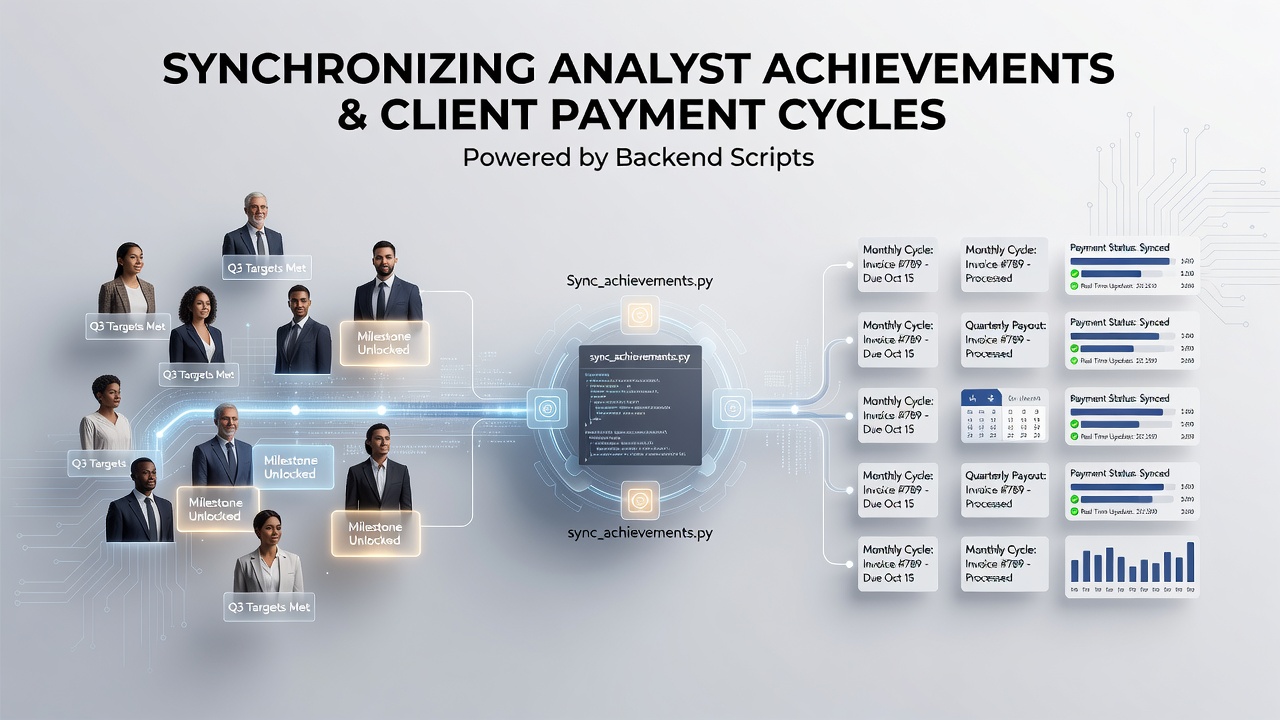
The Role of Backend Scripts in Synchronizing Analyst Achievements with Client Payment Cycles
Backend scripts handle the automated connection between analyst performance data and client billing systems in sports analysis platforms, where achievements such as accuracy rates and prediction outcomes feed directly into subscription adjustments and commission calculations. These scripts run on scheduled intervals, pulling metrics from databases and matching them against payment schedules that renew monthly or quarterly depending on client agreements. Data flows through application programming interfaces that verify each analyst record before triggering invoice generation or account updates, and this process reduces manual intervention while maintaining consistency across user accounts.
Core Mechanisms of Data Synchronization
Scripts typically operate through event-driven triggers that activate when new performance entries appear in the system, and they cross-reference these entries with client profiles stored in separate tables. Analysts record their results in structured formats that include timestamps, success percentages, and category tags, while the scripts validate these inputs against predefined rules before linking them to billing cycles. For instance one script might calculate tiered access levels based on cumulative strike rates and then apply corresponding payment modifiers, whereas another handles renewal notifications that align with the verified achievements. Observers note that such synchronization relies on secure authentication layers to prevent data mismatches, and integration points often include logging functions that track every transfer for audit purposes.
Payment Cycle Alignment Techniques
Client payment cycles follow fixed calendars yet require dynamic adjustments when analyst metrics shift, so backend scripts bridge this gap by recalculating fees or credits in real time. A primary function queries achievement databases at the start of each cycle, compares current figures against historical baselines, and updates subscription statuses accordingly. Researchers from academic institutions have documented how these operations maintain balance between service delivery and revenue collection, while industry reports highlight the use of conditional statements that pause or extend billing periods based on performance thresholds. In August 2026 several platforms implemented enhanced logging protocols that further refined these alignments across distributed server environments.
Additional scripts manage batch processing for high-volume periods, grouping multiple analyst records together before executing payment commands in sequence. This approach minimizes server load and ensures that all linked client accounts receive synchronized updates without duplication errors. Those who maintain such systems emphasize the role of error-handling routines that flag discrepancies for manual review, thereby preserving data integrity throughout the cycle.
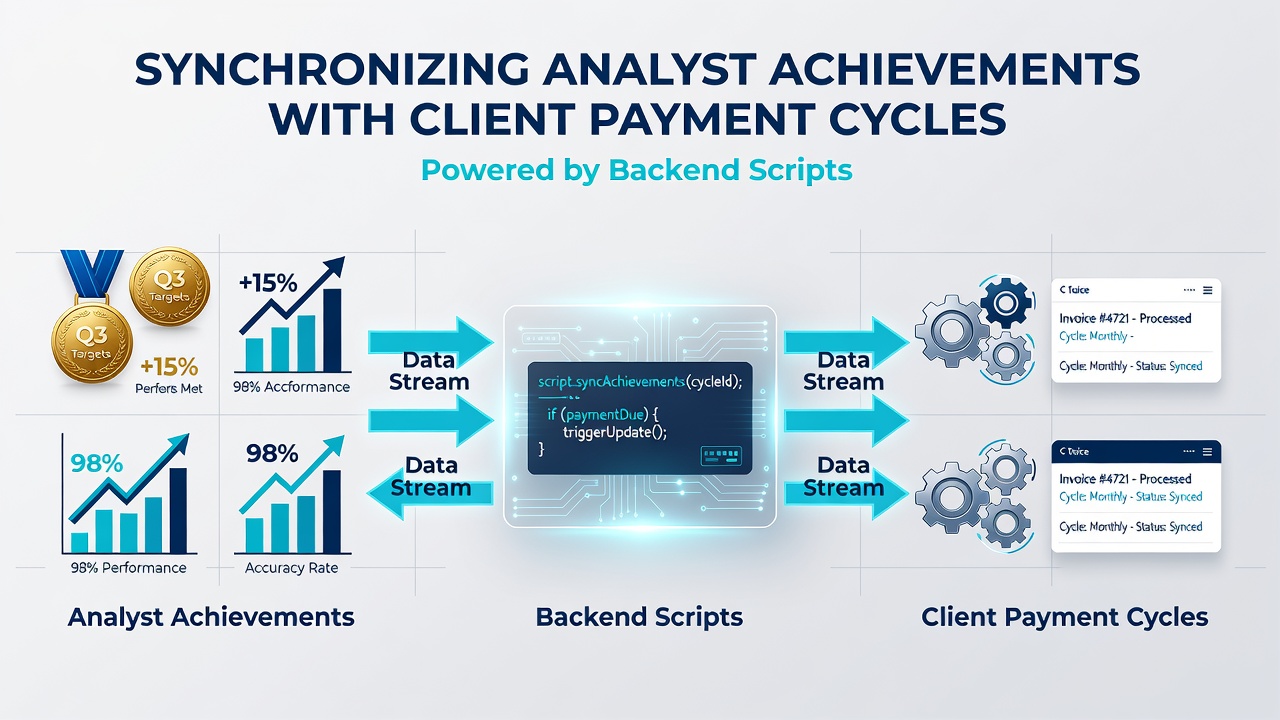
Integration with External Systems
Backend scripts frequently connect to third-party payment gateways and analytics tools through standardized protocols that transmit encrypted achievement summaries alongside billing instructions. According to Federal Reserve guidelines on automated financial processes, these connections must adhere to strict timing rules to avoid transaction failures during peak renewal windows. Scripts also interface with content management layers that display updated analyst profiles to clients, creating a closed loop where verified performance directly influences continued access rights.
One common pattern involves webhook listeners that receive achievement updates from external data sources and immediately propagate changes into the billing module. This setup supports multi-region operations where time zone differences affect cycle start dates, and the scripts normalize all timestamps to a central reference point. Data from the Bank for International Settlements reports on digital payment synchronization shows that similar architectures appear in various forecasting services to streamline revenue recognition tied to measurable outcomes.
Security and Compliance Considerations
Protection of sensitive performance and payment information requires scripts to incorporate encryption at rest and in transit, along with role-based access controls that limit exposure to authorized personnel only. Compliance frameworks demand regular audits of synchronization logs, and these reviews confirm that achievement data has not been altered during transfer to billing systems. Platforms incorporate rate-limiting features within scripts to handle sudden spikes in client queries without disrupting cycle processing, and backup routines ensure recovery points remain available if interruptions occur.
Conclusion
Backend scripts form the operational backbone that aligns analyst achievements with client payment cycles through automated validation, calculation, and update routines. Their design supports scalable handling of performance-linked billing while maintaining records that satisfy regulatory and operational standards across platforms. Continued refinements in script architecture reflect ongoing needs for precision in data exchange between achievement tracking and financial modules.