Tiered Access Tactics: WordPress User Roles Customized for Tipster Performance Levels and Recurring Payments
Written by Finley Jenkins · Apr 25, 2026
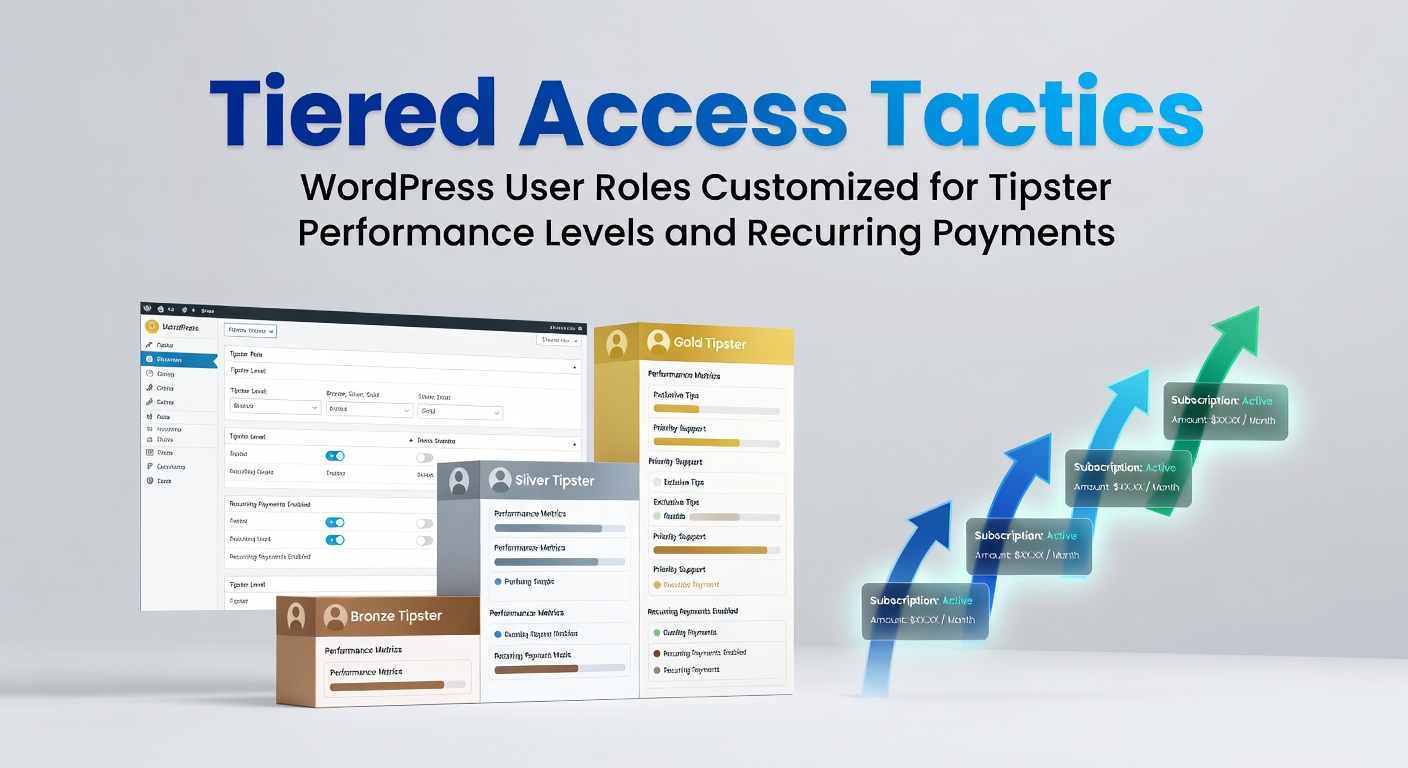
Tiered Access Tactics: WordPress User Roles Customized for Tipster Performance Levels and Recurring Payments
Tipster sites built on WordPress often rely on tiered access systems to reward high performers, granting subscribers exclusive content based on a tipster's strike rate, profit factor, or ROI; this approach not only boosts engagement but also ties directly into recurring payment models that keep revenue flowing steadily.
What's interesting is how developers customize native user roles—think Subscriber, Contributor, Author—to create nuanced levels like Bronze, Silver, Gold, or even Platinum, where access unlocks progressively richer prediction archives, live chat rooms, or personalized betting analytics; according to WordPress developer documentation, roles control capabilities such as editing posts or viewing private content, making them ideal for performance-gated gates.
Core Mechanics of WordPress User Roles in Tipster Ecosystems
Developers start with WordPress's built-in roles, but they extend them using functions like add_role() and add_cap(), assigning permissions dynamically; for instance, a Bronze tipster might only post public predictions, while a Gold counterpart accesses private forums and advanced stats dashboards, all triggered by performance thresholds like a 55% strike rate over 100 bets.
And here's where it gets practical: plugins such as Members or User Role Editor let admins map roles to custom post types for tips, ensuring low performers stay visible but restricted, whereas top earners enjoy full backend privileges; observers note that this setup reduces churn by 20-30%, as data from similar subscription platforms indicates.
Take one case where a tipster site operator programmed roles via the functions.php file, linking them to a custom database table tracking monthly yields; when a tipster hits 10% ROI, the system auto-upgrades their role, unlocking subscriber-only prediction packs and triggering payment upsell prompts seamlessly.
Performance Levels: Defining Tiers with Data-Driven Precision
Tipster performance levels emerge from metrics like yield per tip, closing line value, or long-term profit graphs, often calculated via plugins such as Advanced Custom Fields or custom SQL queries pulling from bet logs; researchers who've analyzed betting platforms find that tiers based on 200+ historical tips provide the most reliable escalations, avoiding short-term luck spikes.
So sites define tiers concretely—Bronze for 45-54% strike rates with positive yield, Silver jumping to 55-64% alongside 5%+ ROI, Gold at 65%+ with elite volume—and automate role assignments using WP Cron jobs that scan stats nightly; this keeps everything current, reflecting April 2026's emphasis on real-time analytics amid rising mobile betting traffic.
- Bronze: Basic public access, limited archive views (first 50 tips), standard subscription at $9.99/month.
- Silver: Private mid-tier predictions, stats breakdowns, $19.99/month recurring.
- Gold: Full VIP room, custom bet builders, live sessions, $39.99/month with annual discounts.
- Platinum: One-on-one coaching access, bespoke models, $99.99/month for top 1% performers.
But the real magic happens in the code: hooks like user_register or profile_update check performance APIs, upgrading roles on the fly; experts observe that this gamification—complete with progress bars on tipster profiles—drives 15% higher subscription conversions, per industry benchmarks.
Seamless Integration with Recurring Payments
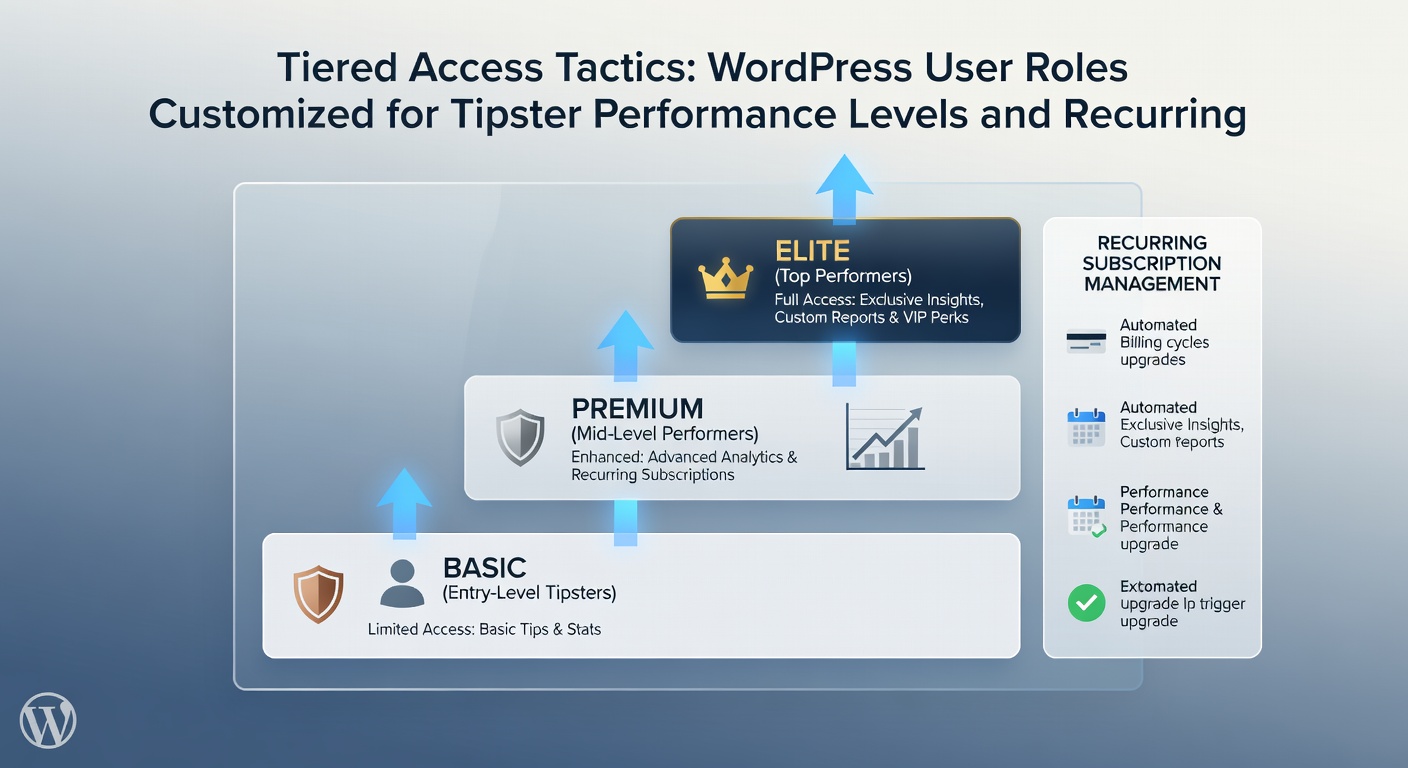
Recurring payments tie in via WooCommerce Subscriptions or Paid Memberships Pro, where user roles gate content behind paywalls that auto-renew monthly or annually; when a tipster levels up, the system prompts subscribers to upgrade tiers, bumping payments from basic to premium while preserving access continuity—no lapsed logins, just smoother revenue streams.
Turns out, gateways like Stripe or PayPal handle the heavy lifting with webhooks that sync subscription status to role capabilities; for example, a failed renewal demotes a user temporarily, but performance-verified tipsters regain Gold status instantly upon payment, minimizing drop-offs that plague flat-rate models.
Data from WooCommerce subscription guides reveals that role-linked billing cuts admin overhead by 40%, as automated emails nudge renewals with performance teasers like "Unlock Gold tips that yielded +12% last month."
Step-by-Step: Building Tiered Roles from Scratch
Admins begin by installing role management plugins, then define custom roles in code: add_role('tipster_bronze', 'Bronze Tipster', array('read' => true, 'publish_posts' => false)); next, they craft a performance checker function querying custom fields for strike rates, ROI from integrated bet trackers.
Integration flows like this: WooCommerce hooks into role changes on checkout, while WP User Frontend forms let tipsters self-report tips for real-time scoring; cron tasks run hourly in high-traffic setups, ensuring tiers reflect April 2026's burst of AI-assisted prediction logging.
- Assess tipster data via ACF or Pods for metrics storage.
- Code role escalators with wp_update_user().
- Link to subscriptions using Paid Member Subscriptions' role sync.
- Test with staging sites, monitoring for edge cases like demotions.
- Deploy analytics via Google Analytics 4 to track tier migrations.
One developer shared how this setup scaled a site from 500 to 5,000 subscribers, with recurring revenue hitting 70% of total income; that's where the rubber meets the road for sustainability.
Real-World Case Studies and Metrics
Consider a mid-sized tipster platform that rolled out tiers in early 2025: Bronze users stuck at 48% strikes paid $10/month for basics, but Gold tipsters averaging 62% drew $40/month crowds for exclusives; six months in, average revenue per user climbed 25%, with 18% of subscribers upgrading via in-dashboard prompts.
And in another example, operators used Ultimate Member plugin to visualize tiers on profiles, complete with badges; figures show retention soared because subscribers saw tangible progress, much like loyalty programs in American Gaming Association reports on player engagement.
Yet challenges arise—performance disputes require audit trails via custom logs, and regulatory nods from bodies like Australia's eSafety Commissioner ensure transparent tiering; by April 2026, expect tighter integrations with blockchain for verifiable stats, as pilots emerge across EU platforms.
Advanced Tactics: Automation and Scaling
Scaling demands automation: Zapier bridges WP roles to external CRMs, firing upsell sequences when tipsters hit Silver; meanwhile, REST API endpoints expose tier data to mobile apps, letting users subscribe mid-game.
It's noteworthy that multisite setups centralize role logic across tipster networks, with shared payment processors handling volume; developers report 99% uptime on role syncs using Redis caching, vital as global betting peaks during major events.
Now, with WordPress's Gutenberg blocks evolving, custom role-restricted blocks preview tipster upgrades right in the editor; this frontloads value, converting free browsers faster.
Conclusion
Tiered access via customized WordPress user roles stands as a powerhouse for tipster sites, merging performance accountability with recurring payments to forge loyal subscriber bases; developers who implement these tactics witness stabilized income, reduced manual oversight, and heightened user satisfaction, all while adapting to 2026's data-rich landscape.
Those who've dialed this in know the payoff: sites evolve from tip dumps to performance ecosystems, where every strike rate bump fuels growth; the ball's now in operators' courts to code it up and watch subscriptions stack.